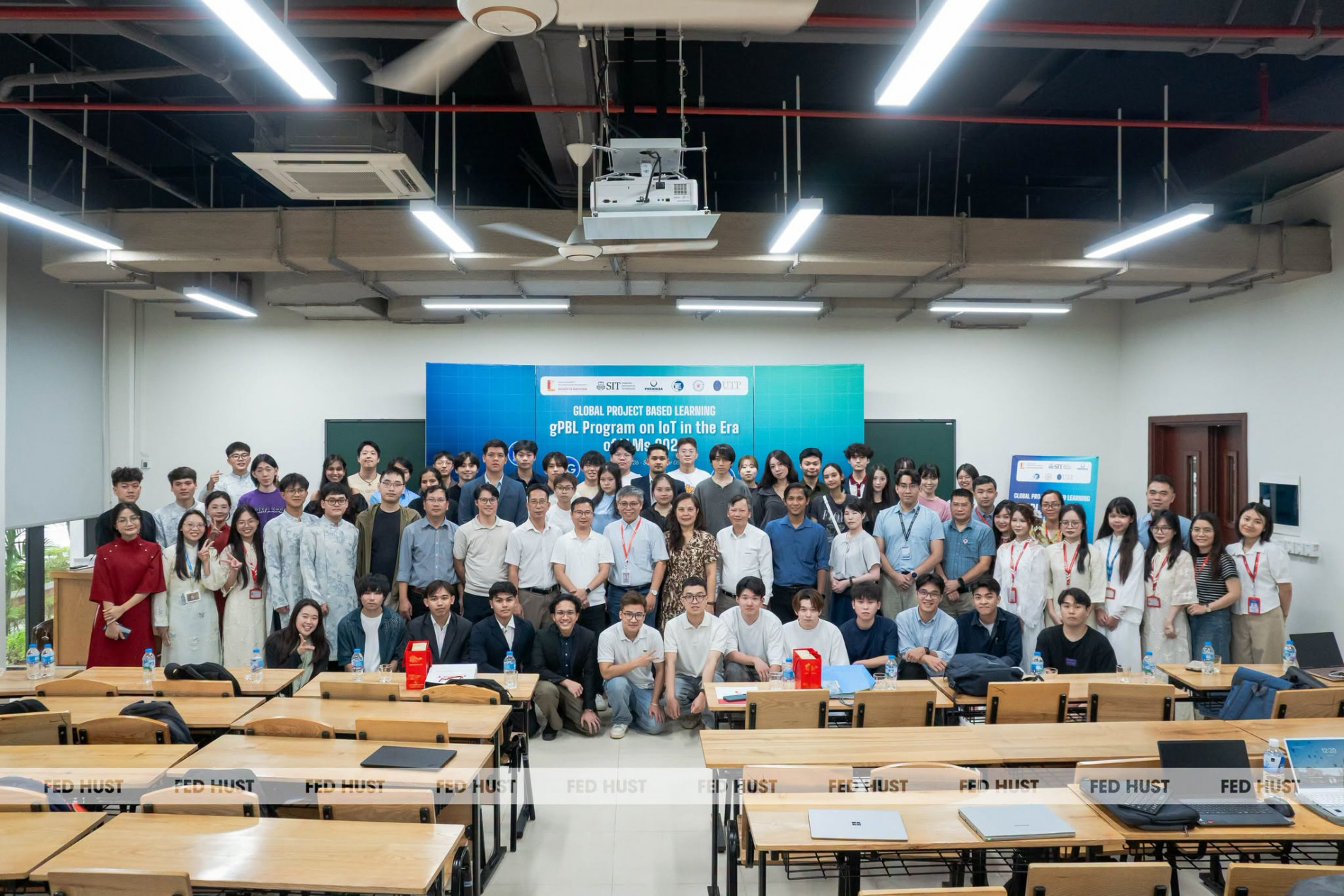
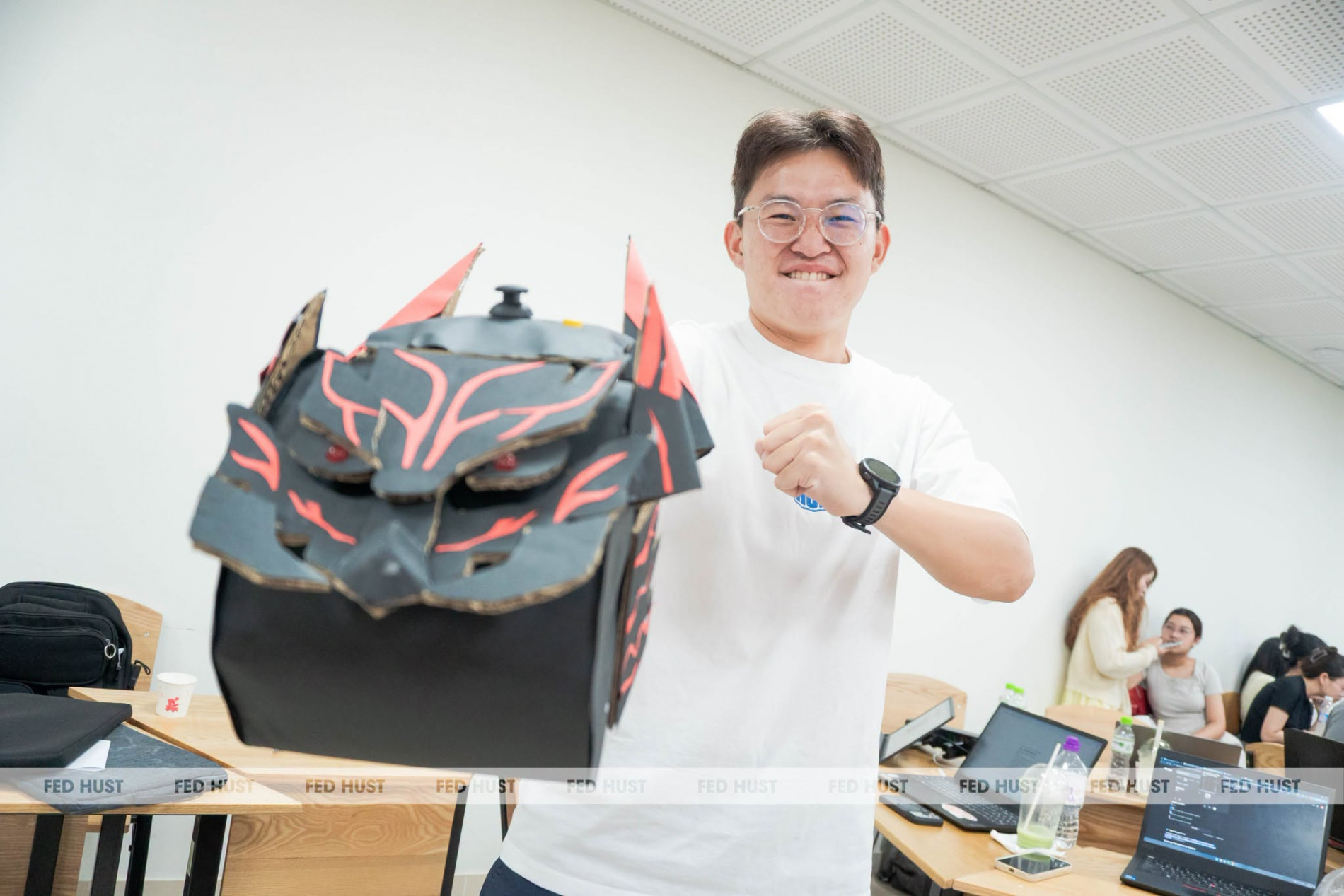
Held from August 26 to September 5, 2026, the Global Project-Based Learning on IoT in the Era of Large Language Models – gPBL 2026 was hosted by the Faculty of Education, Hanoi University of Science and Technology. The programme brought together more than 70 undergraduate and postgraduate students, doctoral candidates, and faculty members from Shibaura Institute of Technology (SIT), Japan; Hanoi University of Science and Technology (HUST); Phenikaa University; VNU University of Engineering and Technology; Ming Chi University of Technology, Taiwan (China); and Universiti Teknologi PETRONAS, Malaysia.
Initiated by Shibaura Institute of Technology, gPBL is an annual international learning programme. In Vietnam, the Faculty of Education has hosted the programme at HUST continuously since 2022, with the exception of 2023, when Phenikaa University served as the host institution.
Over the years, gPBL has developed into a regular platform for regional academic collaboration, providing students with opportunities to learn, conduct projects, and solve problems in multidisciplinary and multicultural teams.
Learning from Problems without Prescribed Answers
Unlike a conventional technology course, gPBL is designed around the principles of global project-based learning. Students do not simply acquire technical knowledge; they are required to collaborate with peers from different countries and academic disciplines to address open-ended problems.
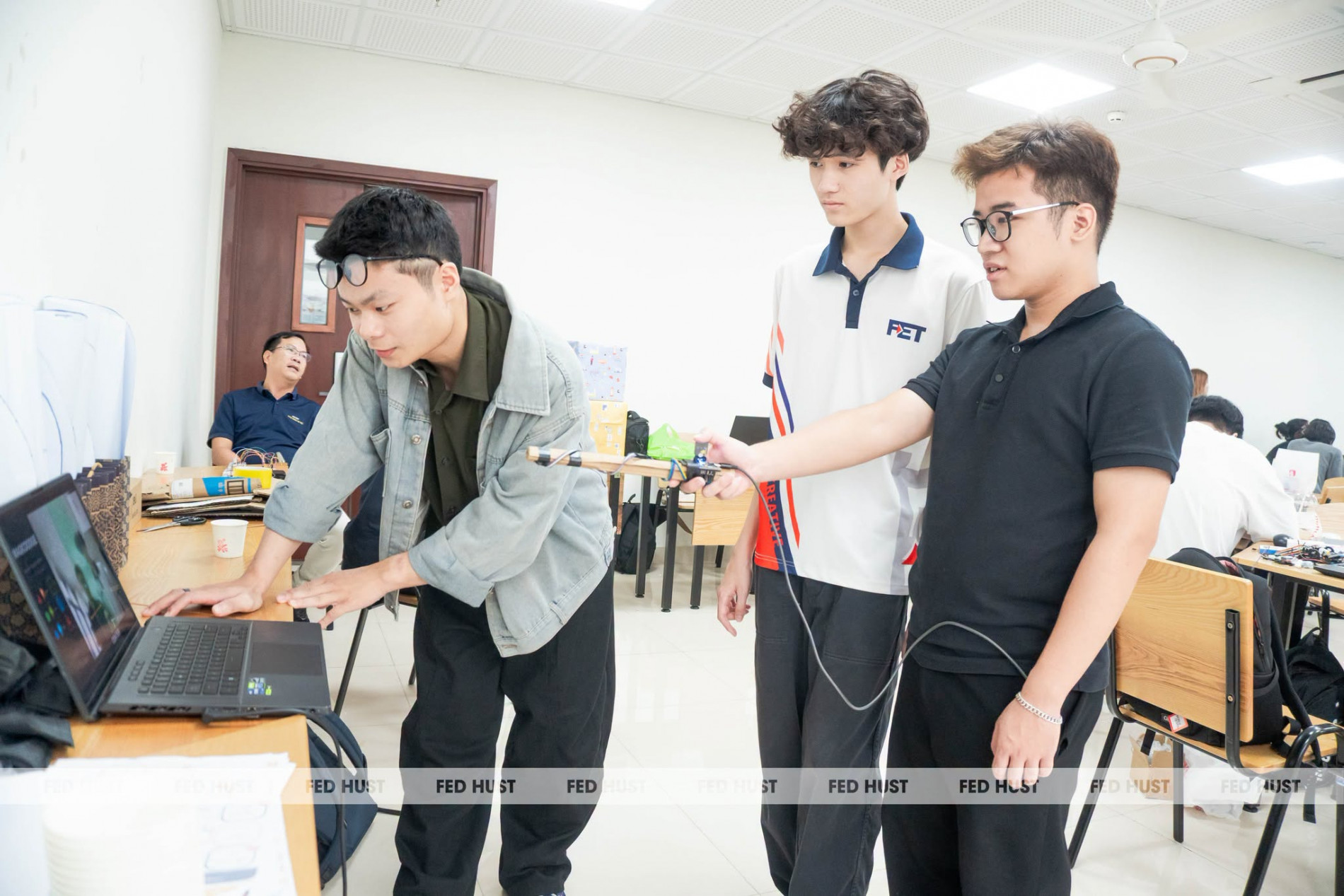
Starting from a real-world challenge, each team identifies user needs, analyses the context, proposes a solution, allocates responsibilities, develops and tests a prototype, and finally presents its outcomes to an international panel of faculty members.
Under the theme “
IoT in the Era of Large Language Models,” gPBL 2026 challenged students to explore how IoT technologies could be combined with large language models to build systems capable of collecting data from the physical environment, processing information, and supporting human decision-making.
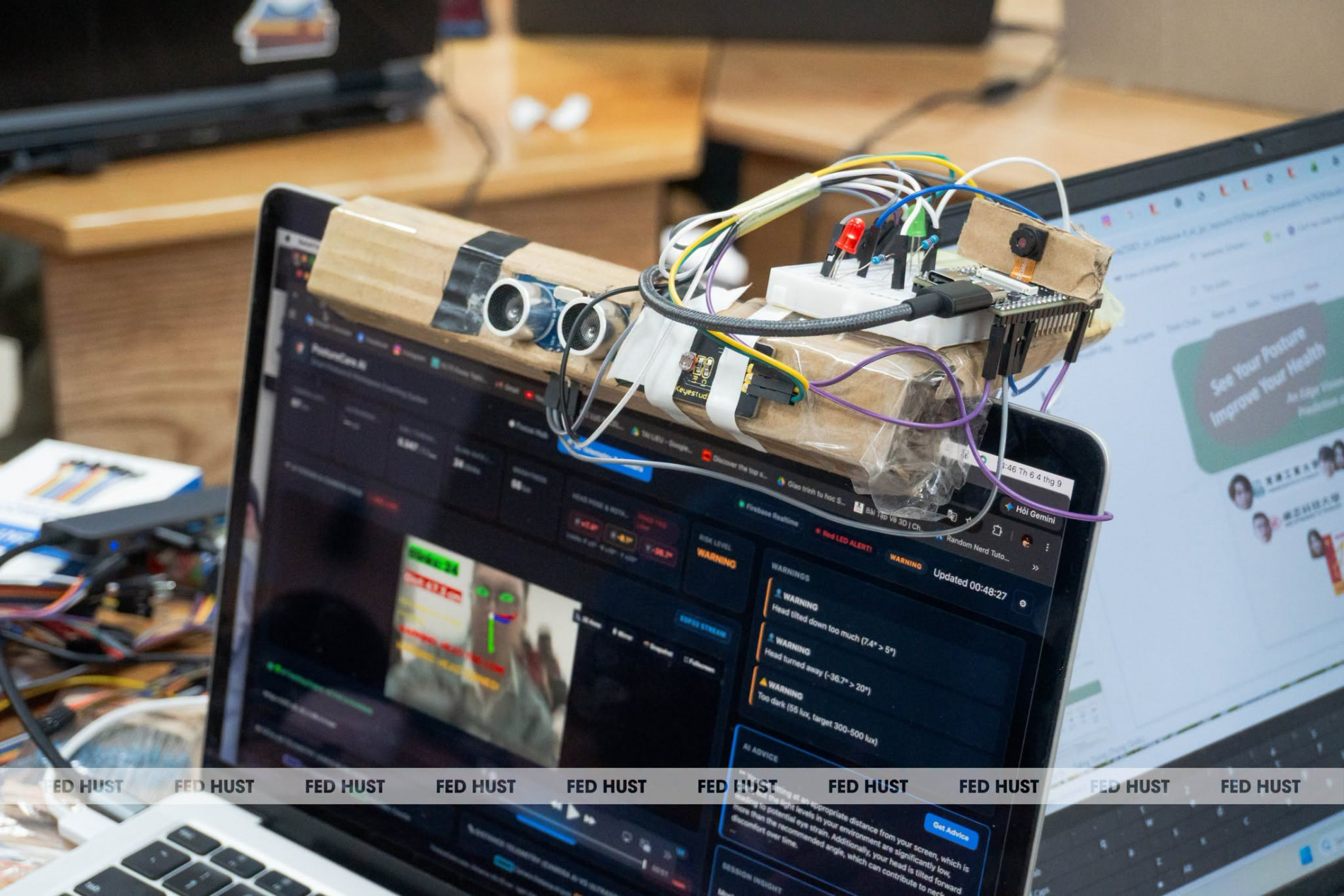
The projects addressed a diverse range of everyday challenges, including monitoring posture and health risks associated with prolonged computer use; early warning systems for multiple natural hazards; smart irrigation and agricultural monitoring; and assistance systems for reversing and parking vehicles.
Other teams focused on health and quality-of-life issues, such as preventing indoor heatstroke, particularly among elderly people, or developing interactive physical games that combine bodily movement with cognitive tasks to improve both physical activity and responsiveness.
Importantly, students were encouraged to move beyond the question of simply what AI can do. They also had to consider where AI should be used and which decisions should remain under human or deterministic control.
For systems related to health, safety, or risk warnings, several teams chose to rely on clearly defined rules and algorithms for critical decisions, while using LLMs primarily to interpret contextual information, explain results, or provide recommendations.
The Learning Process Matters as Much as the Final Product
According to Assoc. Prof. Dr. Le Hieu Hoc, Dean of the Faculty of Education, HUST, the greatest value of gPBL lies not only in the technological products created by students but also in the learning process itself.
“What matters is not simply whether students can build an IoT prototype or an AI-enabled application. The greater value lies in the process through which students from different countries and disciplines identify problems together, exchange ideas, experiment, receive feedback, and continuously revise their solutions. Through this process, competencies such as communication, collaboration, critical thinking, problem solving, adaptability, and the ability to work in an international environment are developed in a very authentic way.”
He noted that this educational philosophy also reflects an important area of shared interest between HUST and Shibaura Institute of Technology: engineering and technology education should provide students with more opportunities to move beyond the traditional classroom, engage with open-ended challenges, and learn through the experience of solving authentic problems.
Project-based learning inevitably involves uncertainty. Initial ideas may prove infeasible, devices may not perform as expected, team members may approach the same problem differently, and prototypes may need to be redesigned several times. These situations, however, are not considered failures of the learning process.
“In project-based learning, having to redesign a product several times or discovering that the first idea does not work is itself part of learning. Students learn how to ask better questions, make use of feedback, adapt their solutions, and share responsibility for the outcome of the whole team. These are experiences that are very difficult to obtain by working only on exercises with predetermined answers,” Assoc. Prof. Dr. Le Hieu Hoc explained.
From Bilateral Cooperation to a Regional University Network
A distinctive feature of gPBL 2026 was its continued expansion beyond the bilateral partnership between HUST and SIT to include universities from across the region.

Students from Japan, Vietnam, Taiwan (China), and Malaysia were deliberately distributed across multinational teams. Differences in language, academic background, professional expertise, and culture made collaboration more challenging, but these differences were themselves an essential part of the learning experience.
“In an international project, no individual, discipline, or university has all the answers. Innovation often emerges when different perspectives come together,” Assoc. Prof. Dr. Le Hieu Hoc said.
The ability to collaborate with people who have different backgrounds and ways of thinking is becoming increasingly important for university graduates. The gPBL environment therefore allows students to experience, at an early stage, how international research, engineering, and innovation teams operate in practice.
In addition to project development, the programme included research workshops and cultural exchange activities, including opportunities for participants to explore Hanoi and Ha Long.
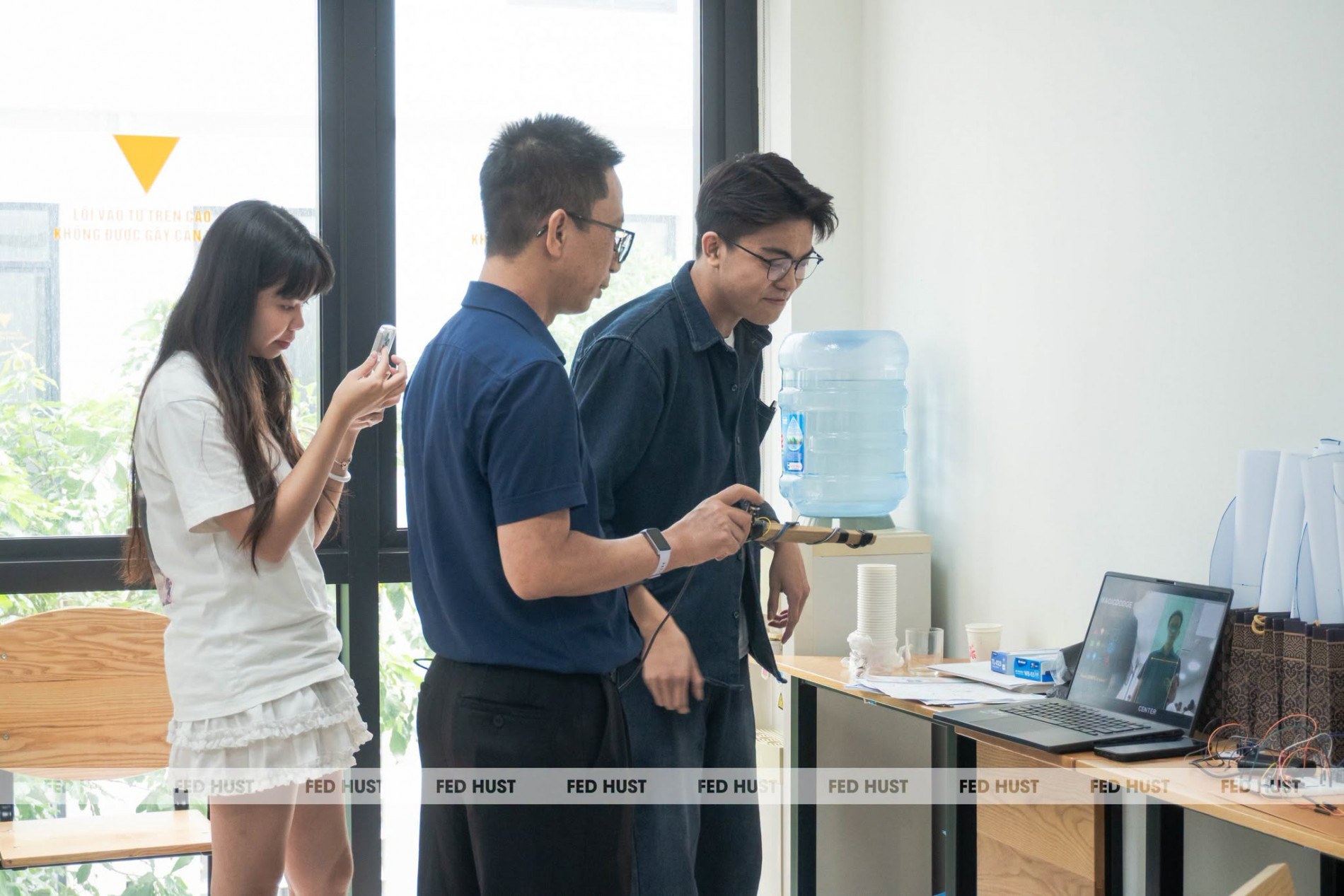
At the end of the programme, teams finalized their prototypes and presented their project outcomes to faculty members from the participating institutions.
The combination of academic activities, project work, and cultural experiences enabled students not only to broaden their technological knowledge but also to strengthen intercultural communication skills and build learning relationships that extend beyond their home universities.
Creating New Opportunities for Students and Faculty
Building on several years of gPBL implementation, the Faculty of Education expects the programme to continue serving as a platform for deeper collaboration among Hanoi University of Science and Technology, Shibaura Institute of Technology, and partner universities.
Although multinational student teams may work together intensively for only a limited period during the programme, the relationships established through gPBL can potentially develop further through student exchanges, joint research projects, innovation initiatives, and other international learning programmes.
“We hope that the projects and friendships that begin through gPBL will not end when the programme concludes, but will develop into long-term academic and professional connections among students, faculty members, and universities,” Assoc. Prof. Dr. Le Hieu Hoc emphasized.
Through gPBL 2026, IoT and artificial intelligence became more than subjects for students to study. They served as tools through which young people from different countries could work together to address real-world problems while developing the creativity, collaboration, adaptability, and international competencies required in an increasingly interconnected learning and working environment.